As Kim mentioned in the previous blog, we’re lazing back in Malta and catching up on Greece, with this final episode on Athens.
Athens is a large, vibrant city. There are 3.5 million residents, and it feels like about that many travellers, again. Like Crete, the driving is a free for all, and while I was driving in Crete outside of a major city, I was quite happy to not be driving in Athens. Motorcyclists rule the road, they are everywhere, dodging in between cars…no one wearing a helmet. Car drivers are not much better…here, the vehicle has priority so you dare not cross a road on foot assuming they will stop. They often do not.
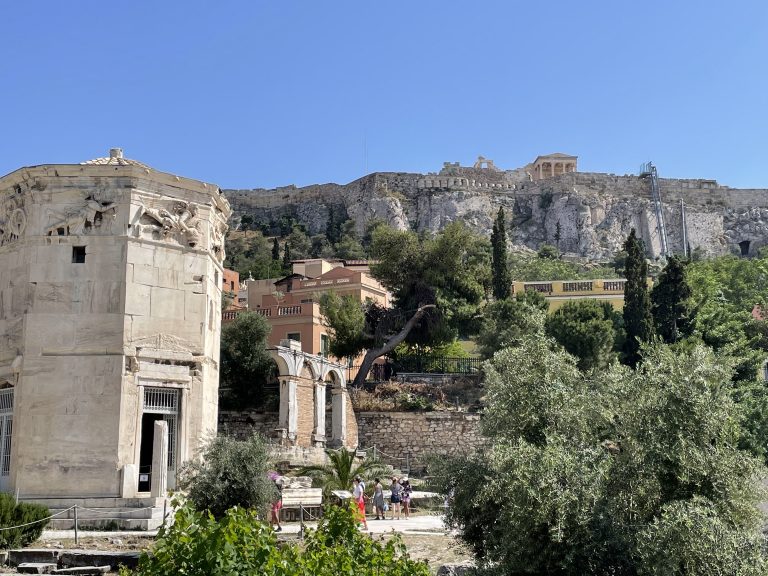
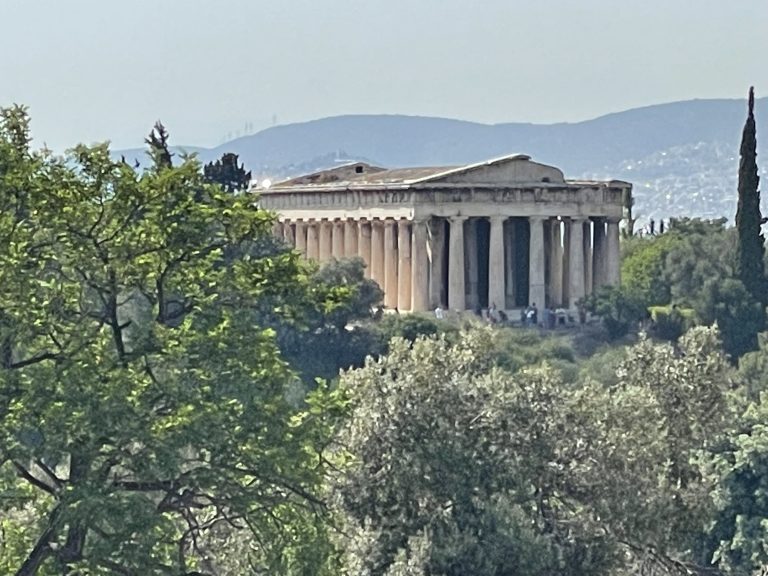
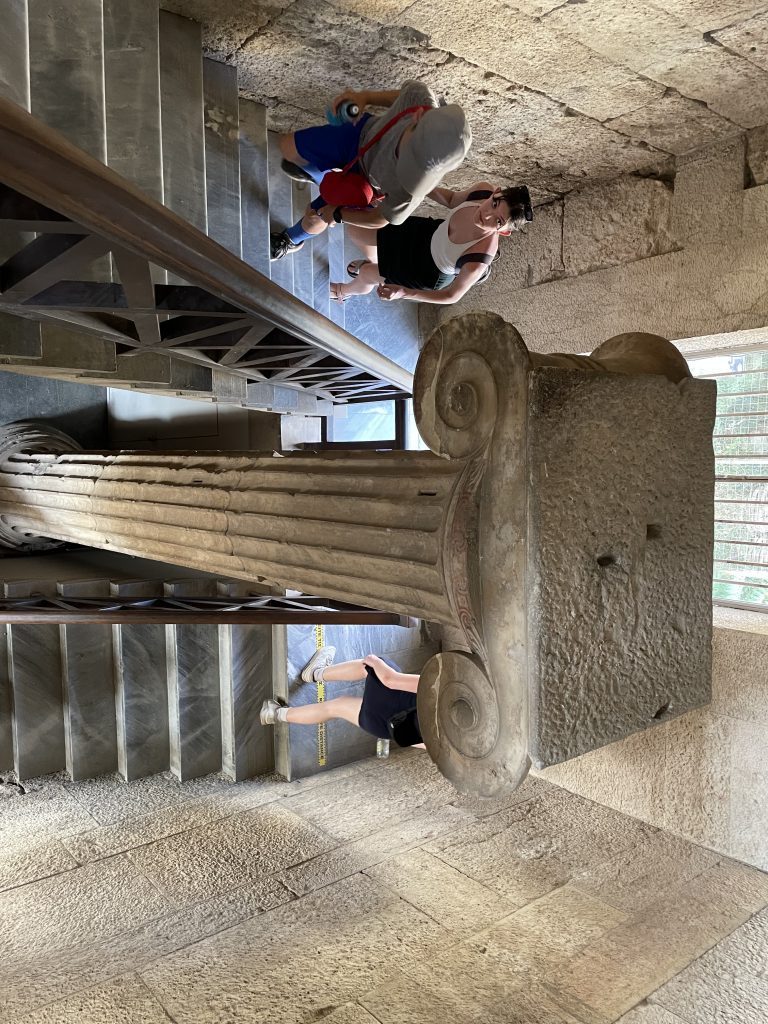
Anyway, all quite amusing, but not the main attraction in Athens. History is everywhere. While you read about the Acropolis and Parthenon, what is immediately evident is that Athens is a city with newer buildings surrounding ruins…and ruins are everywhere. Unfortunately, it would be nice to have seen them in their glory, but much has been destroyed over the centuries. That said, with the proper understanding of what is what, and how this ruin here relates to that ruin there, you start to get a sense of what the core of Athens may have looked like 2500-3000 years ago.
We had two full days, the first was a self guided walking tour using GPSmyCity, whereas on day 2 we paid a guide for a private tour of the Acropolis.
Day 1
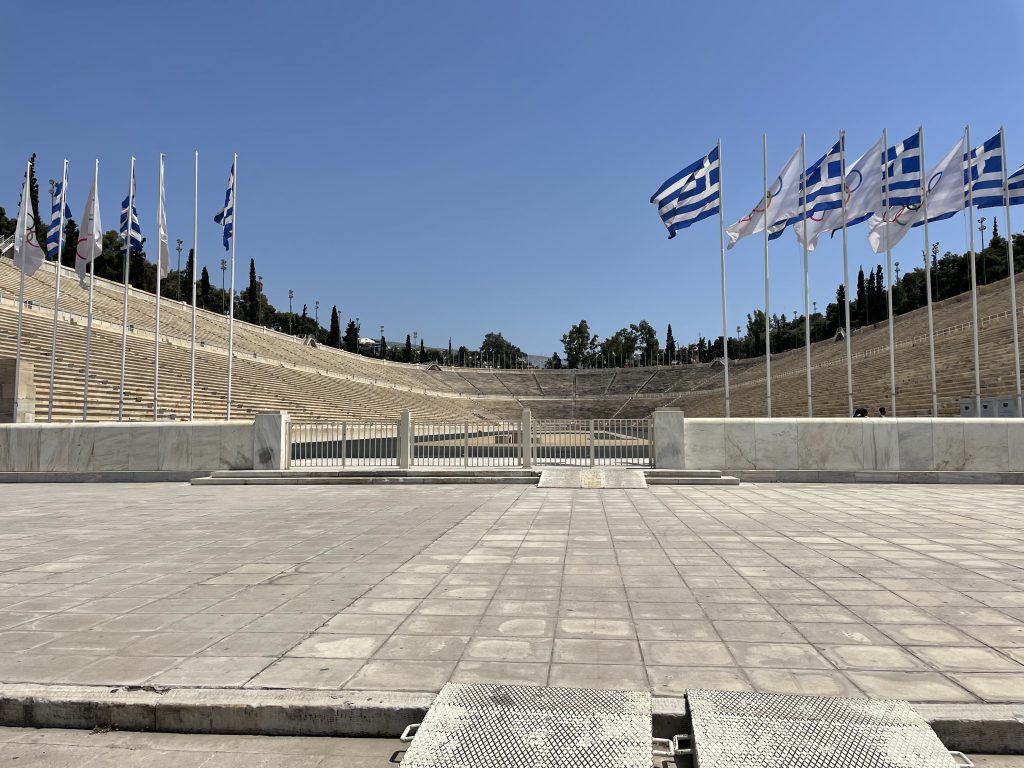
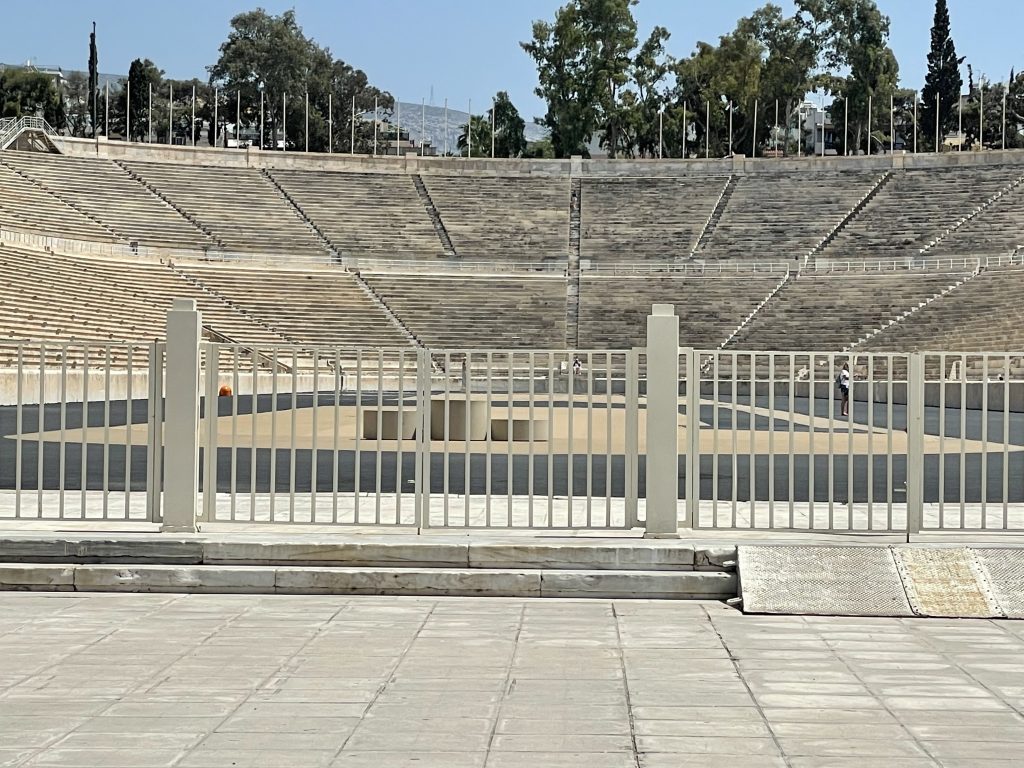
We started by visiting the original Olympic Stadium – the Panathenaic Stadium. The original structure was built in ancient times, rebuilt using marble in 329 BC, renovated and enlarged to 50,000 capacity in 140 AD, but then was abandoned and fell into ruins after the 4th century. It was then excavated and refurbished for the olympics in 1896. I would have liked to just run a lap of the infield, maybe stand on the podium, to get a sense of what it would feel like, but we didn’t buy tickets to get in.
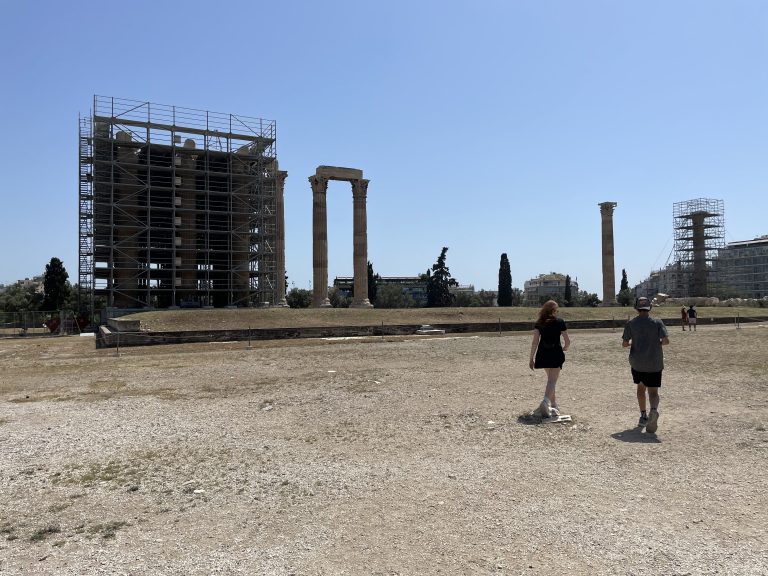
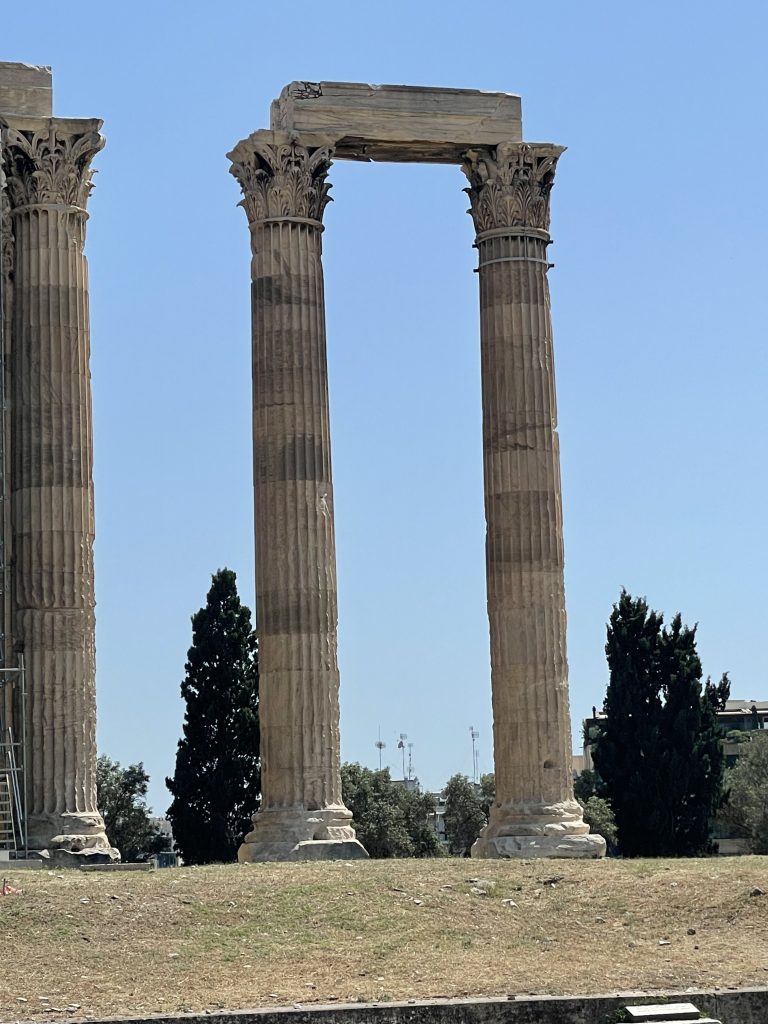
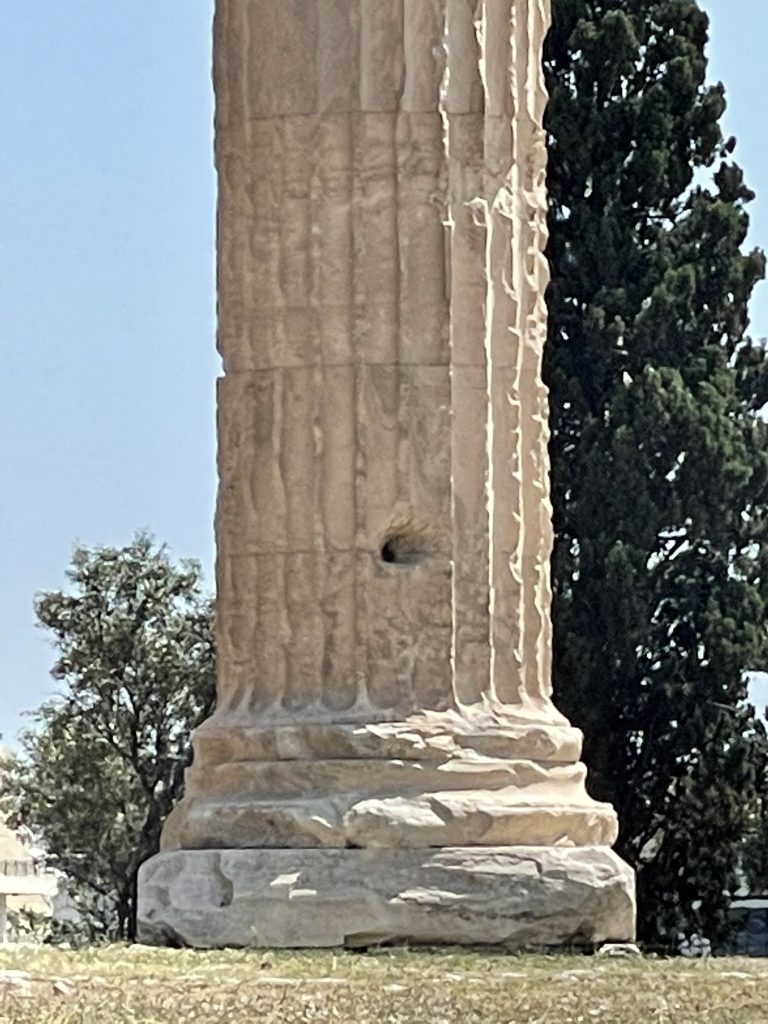
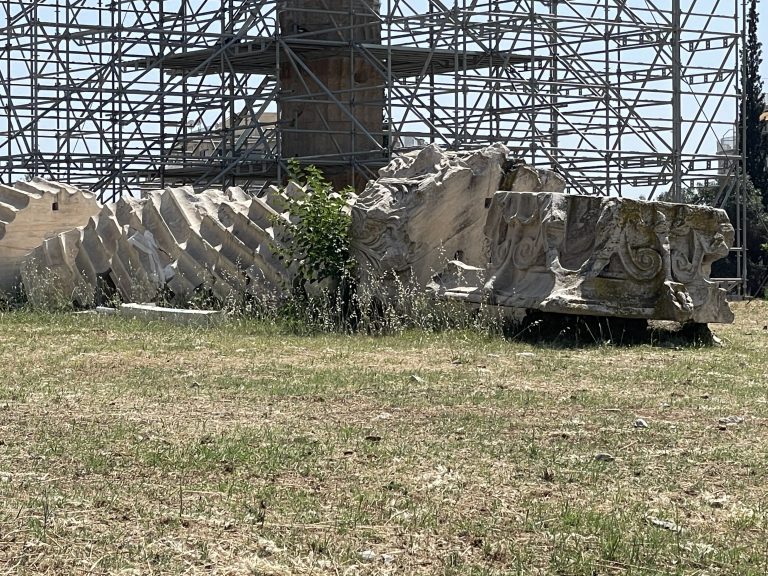
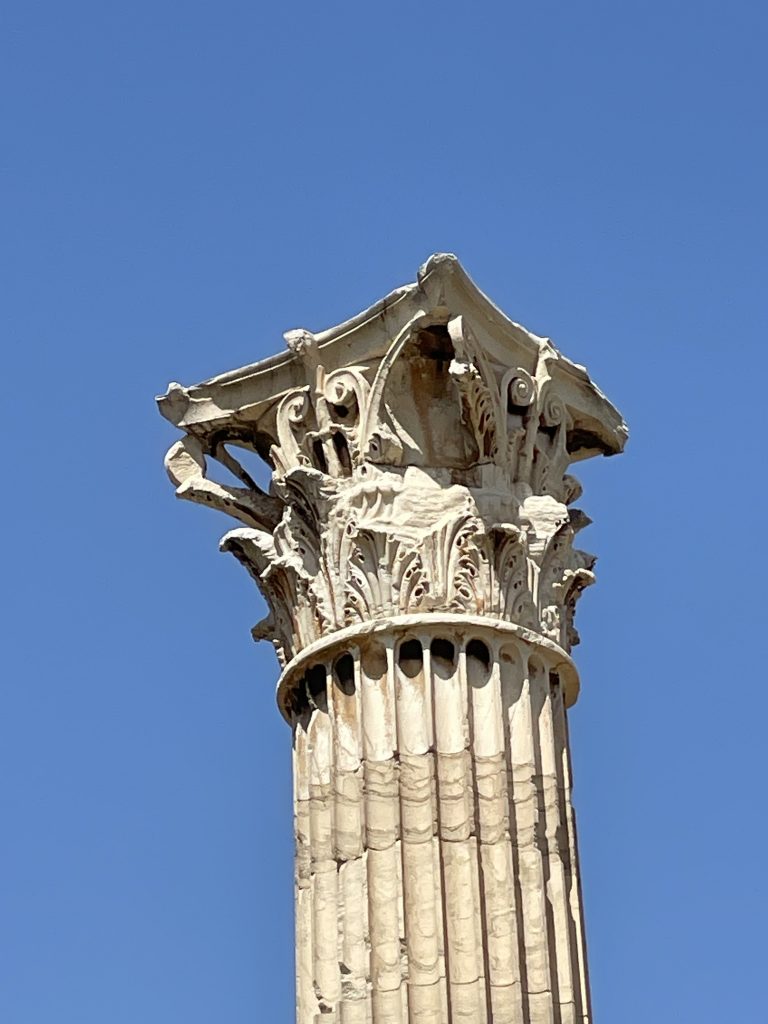
We also visited the Temple of the Olympian Zeus. This was the largest of the temples in Athens, in the shadow of the Acropolis. The immensity of this temple would have been an impressive sight. Only 16 pillars of the original 104 remain standing, but each one by itself is impressive. One fell in a storm in the 1800’s, while the others are being restored in an attempt to give them some longevity.
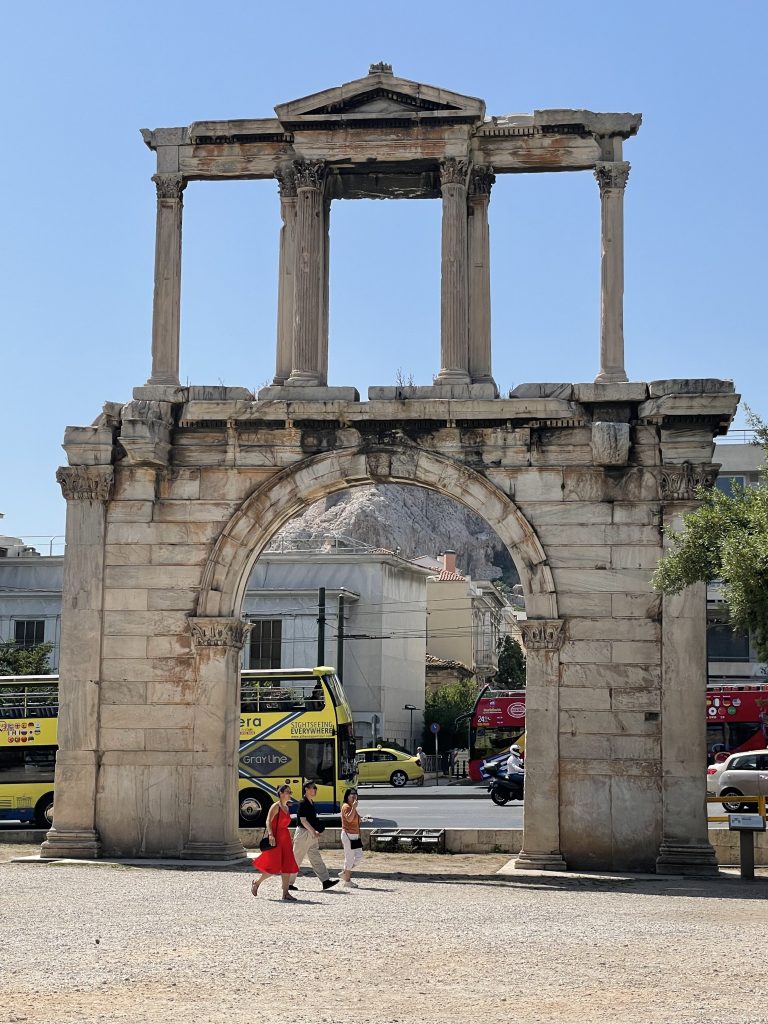
The Emperor Hadrian committed to finishing the structure in 131 AD, and the Arch of Hadrian was constructed at the corner of the site. You’ll notice just under the arch a rocky hill…that is the Acropolis, so you can get a sense of the proximity of this massive structure at the base of the Acropolis.
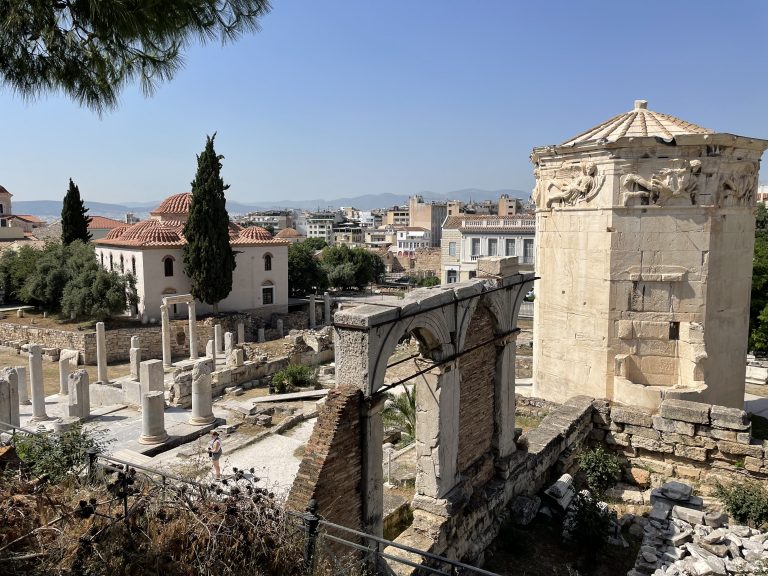
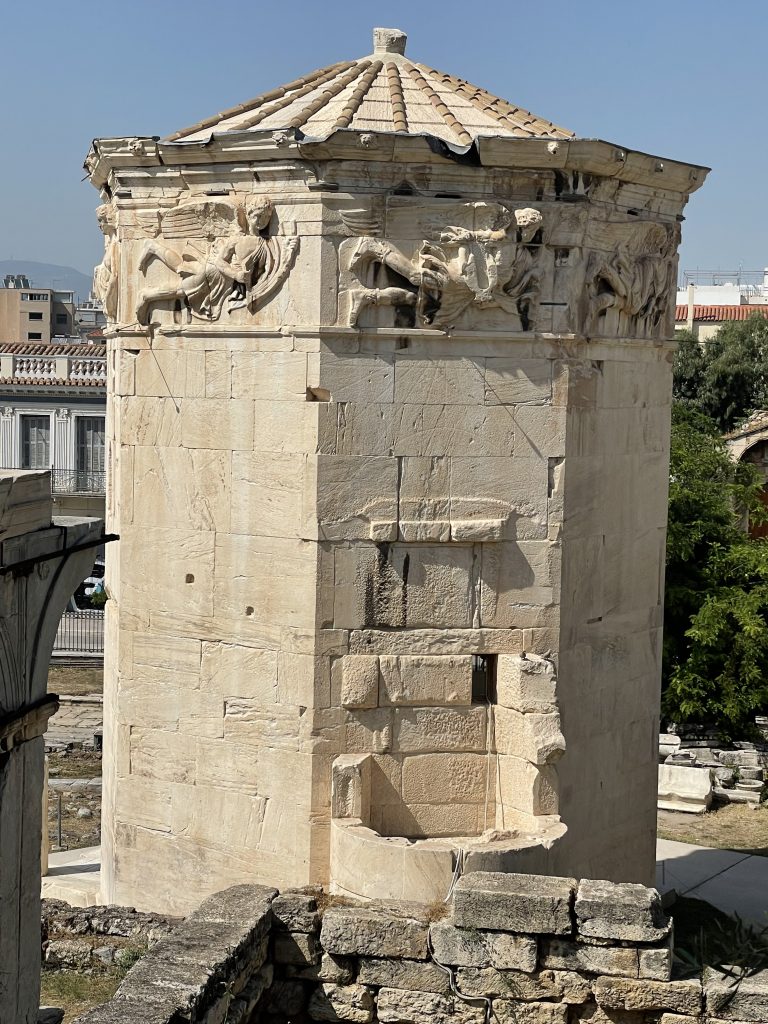
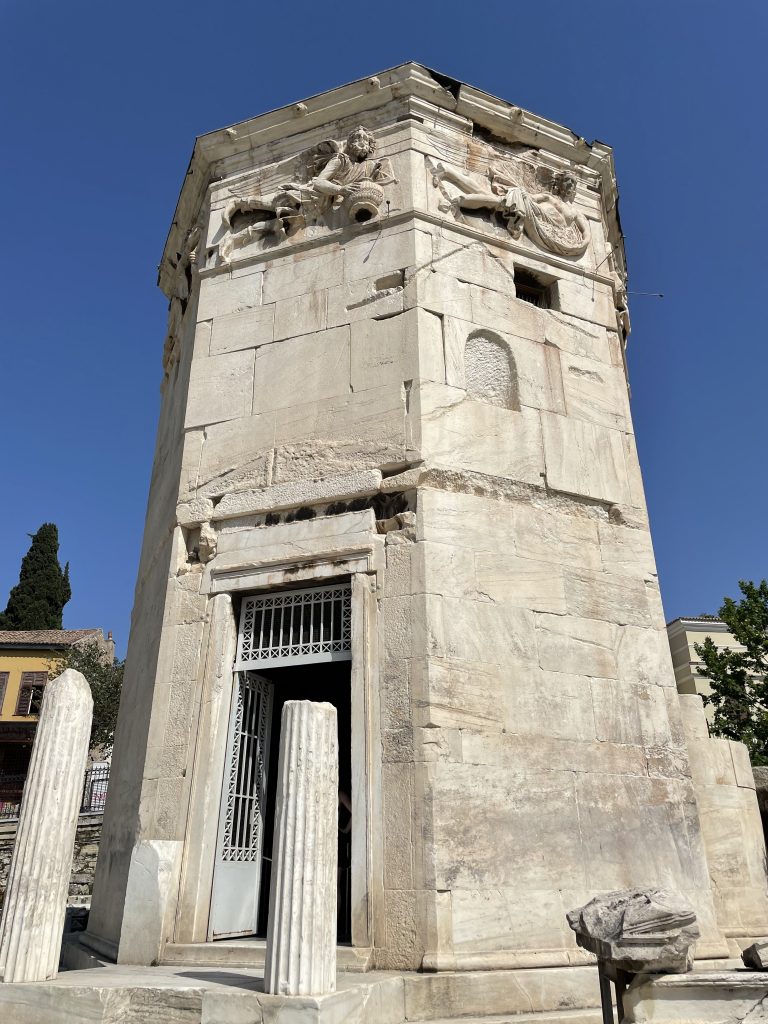
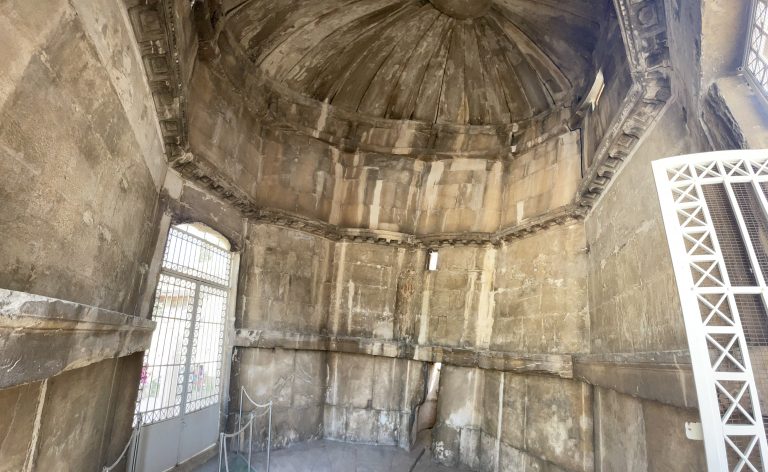
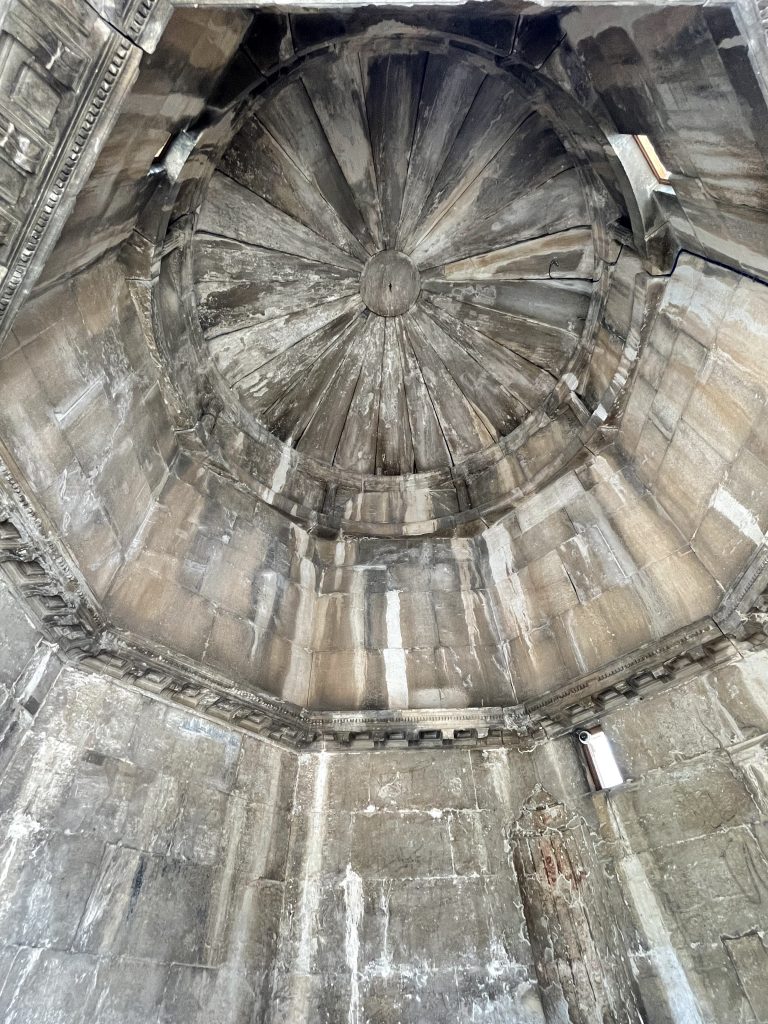
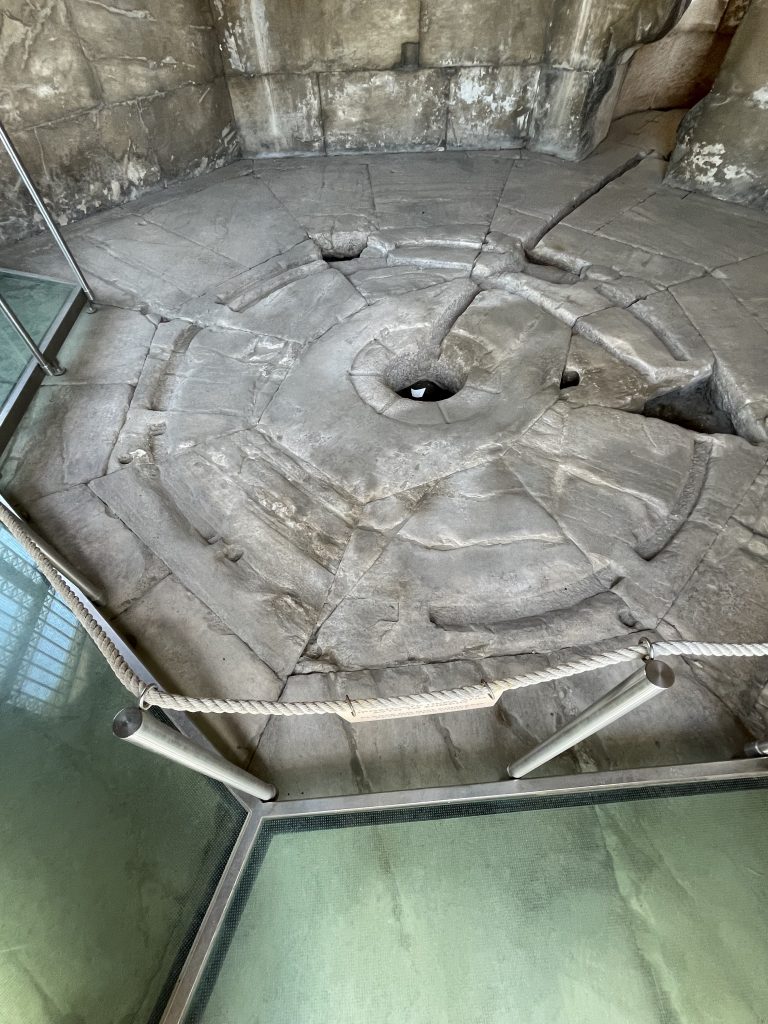
Everything surrounds the Acropolis, and on its north side is the Temple Of The Winds. The structure consisted of sundials, a water powered clock, and wind vanes – it was the world’s first meteorological station.
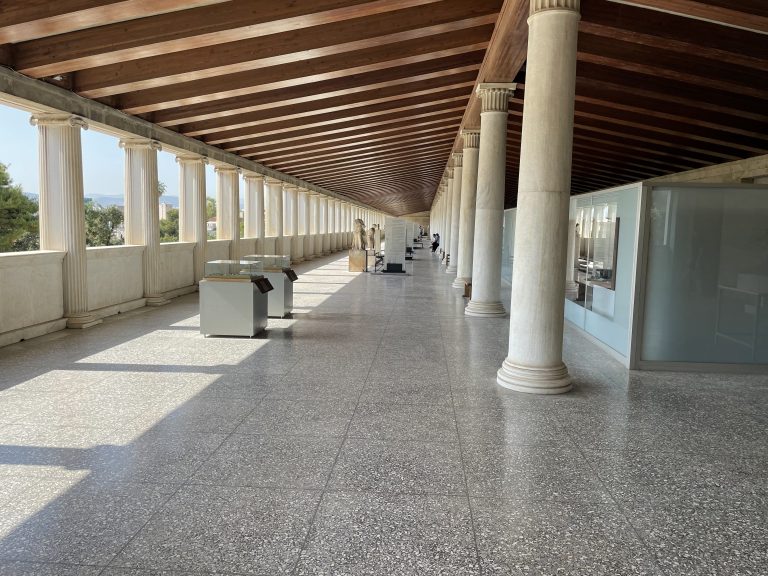
We also visited the Athenian Agora (assembly area) which for every city was the focal point of public life. This is where leaders stood at podiums and preached to the masses, where political gatherings, elections, trials, theatrical performances, social gatherings, religious processions, and philosophy lessons took place. It is literally the birthplace of democracy. As I stood here in its birthplace, my immediate thought was how many are actively working to dismantle it.
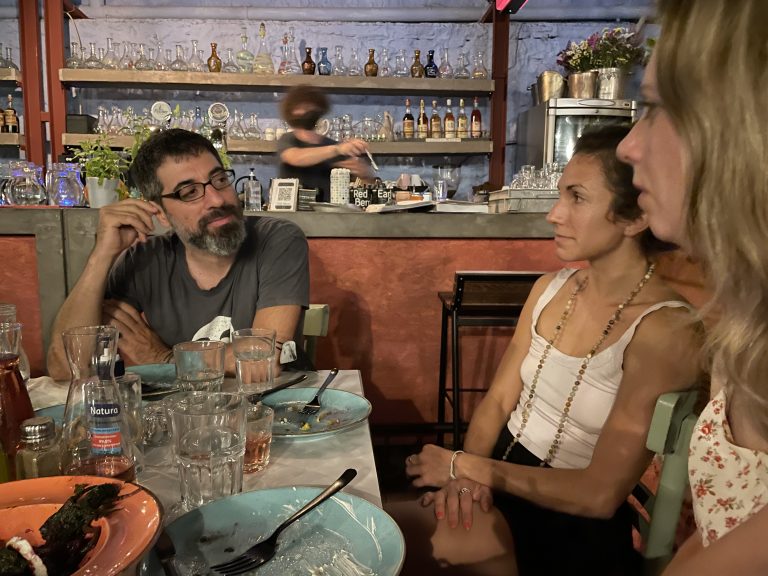
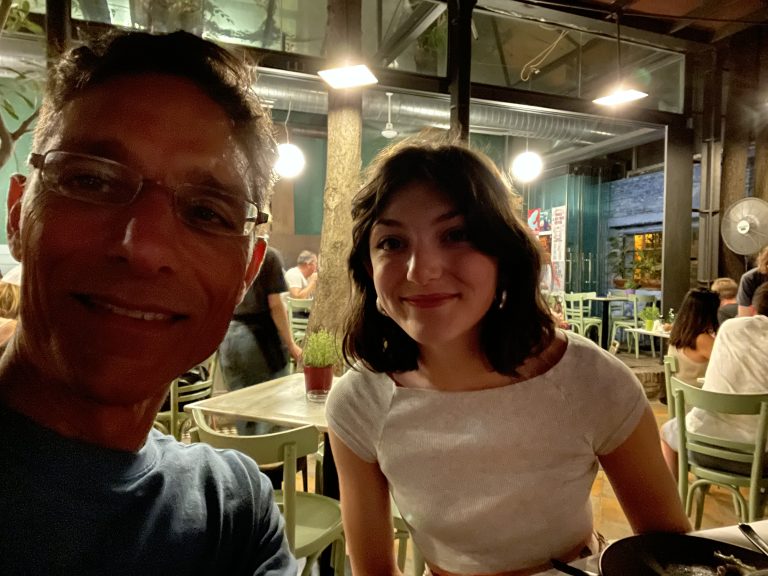
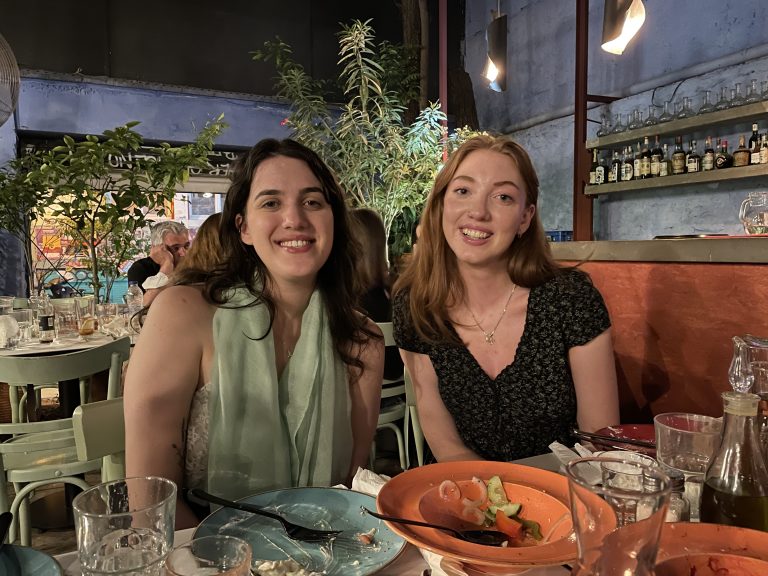
We wrapped up the evening having dinner with my first cousin once removed, Mary Kate, and her partner Paul. We sat at 9:30pm, and ate and drank until 12:30am. Luckily, my youth allowed me to keep pace with the younger crowd! It was wonderful to see MK again, and to meet Paul.
Day 2
The following day, our last in Greece was all about our tour of the Acropolis. Mary Kate had connected us with a tour guide, Dimitra, who was outstanding. Our tour started at 9am and lasted until 11:30, and with Athens temps reaching into the low 30’s, ending before noon was a welcome relief. It was hot!
But the tour was fantastic. Dimitra told us up front that she was an archeologist, and Kim and I shared after the tour that as soon as she told us, we both thought “ya, she’s gonna be good!” And she was.
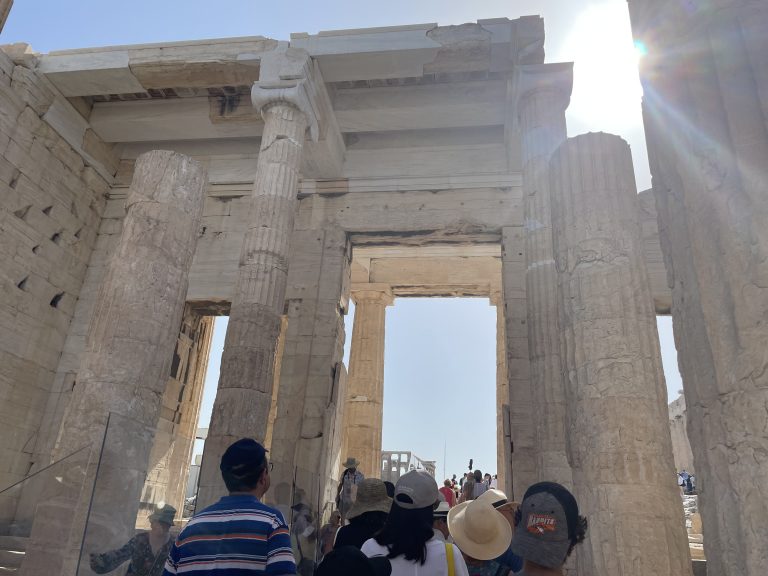
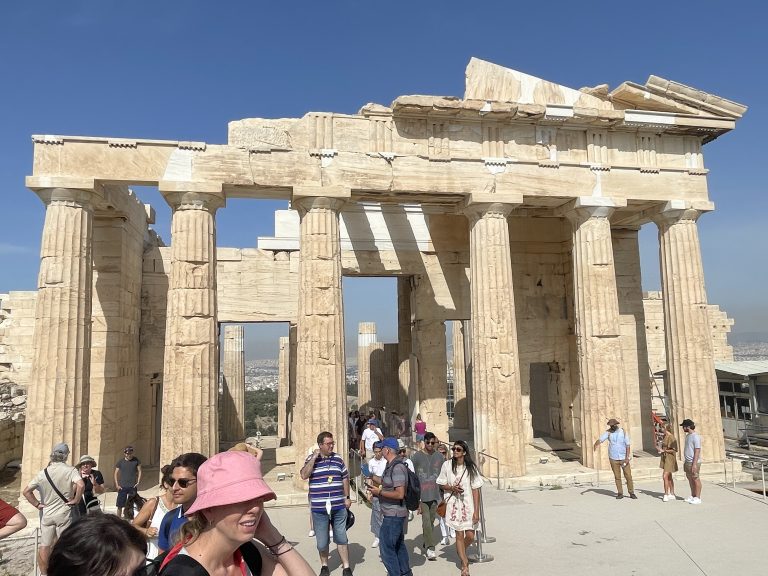
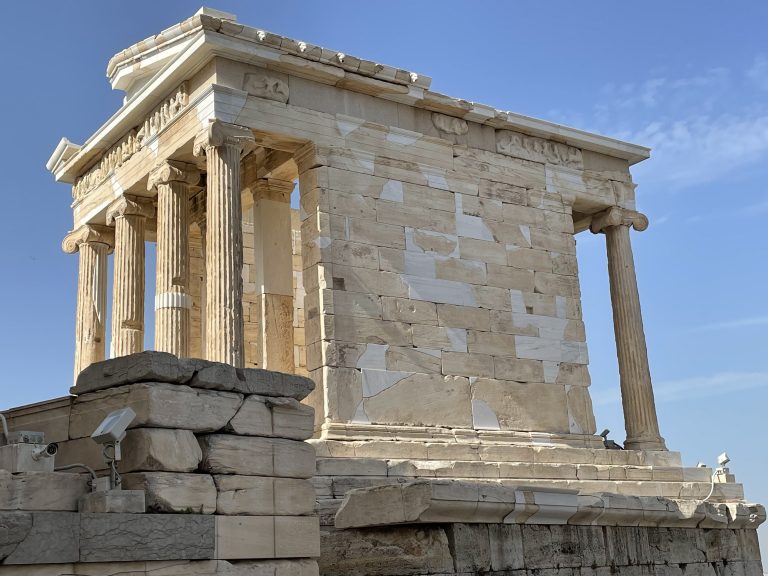
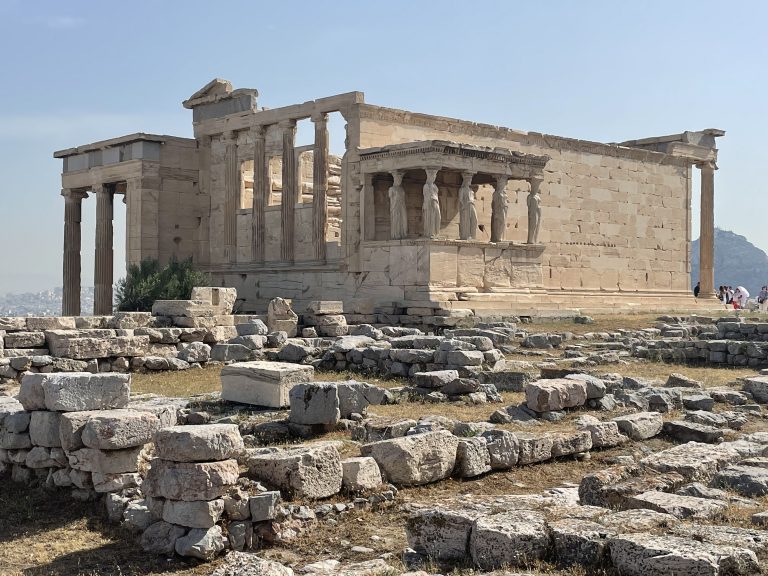
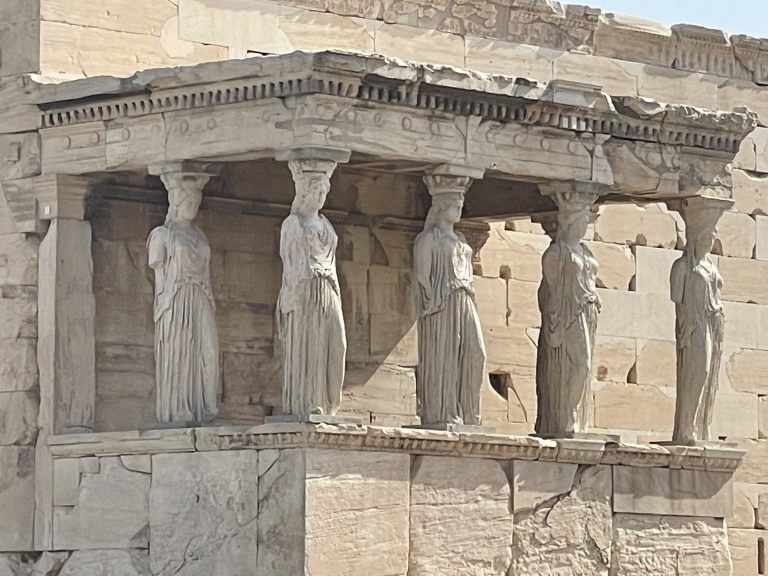
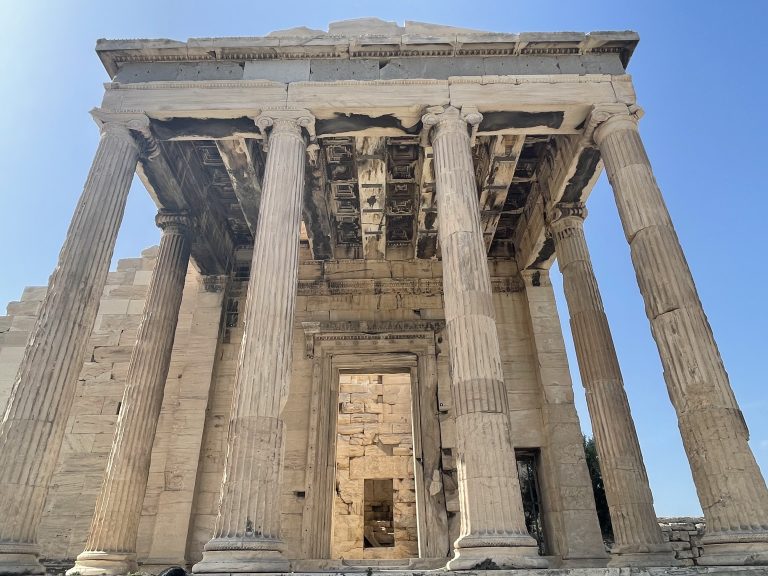
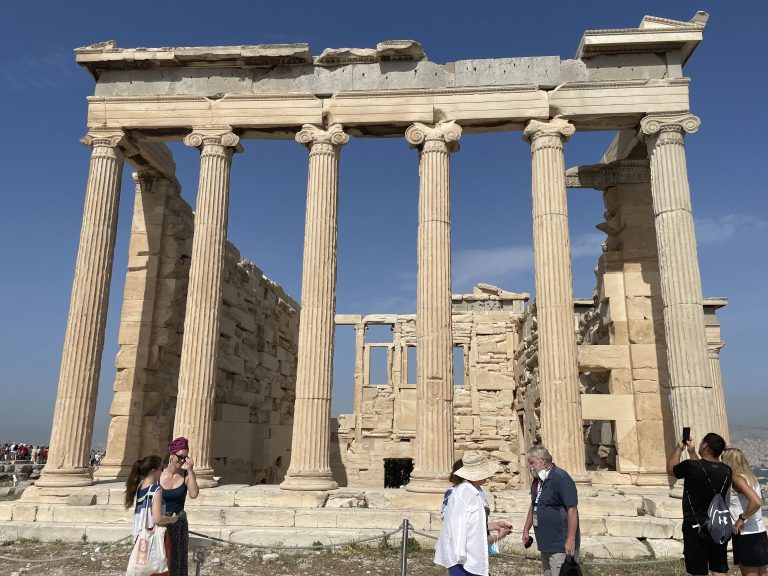
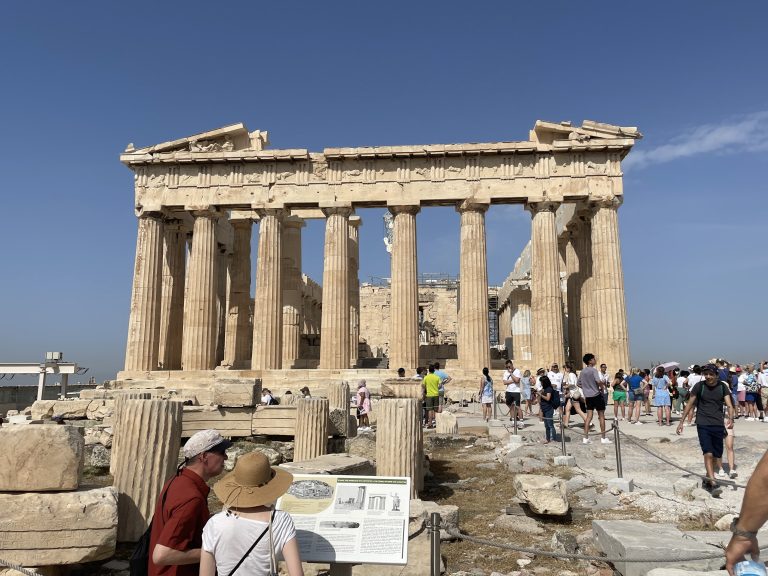
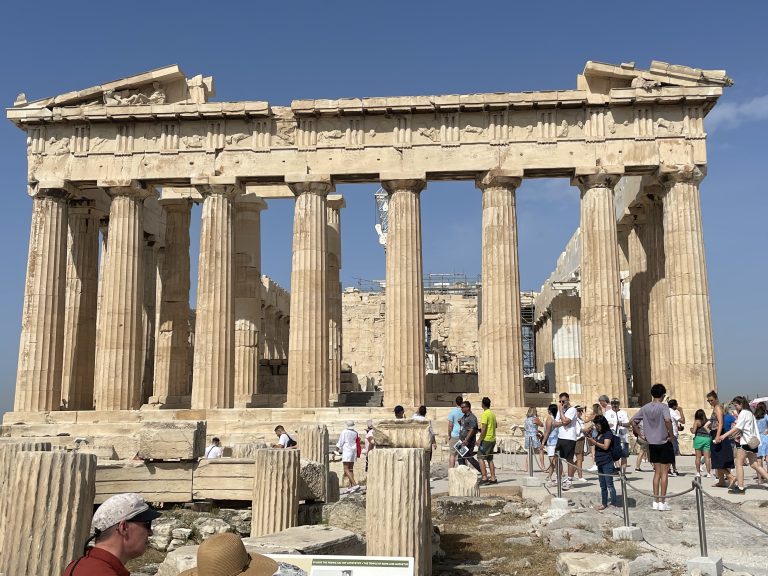
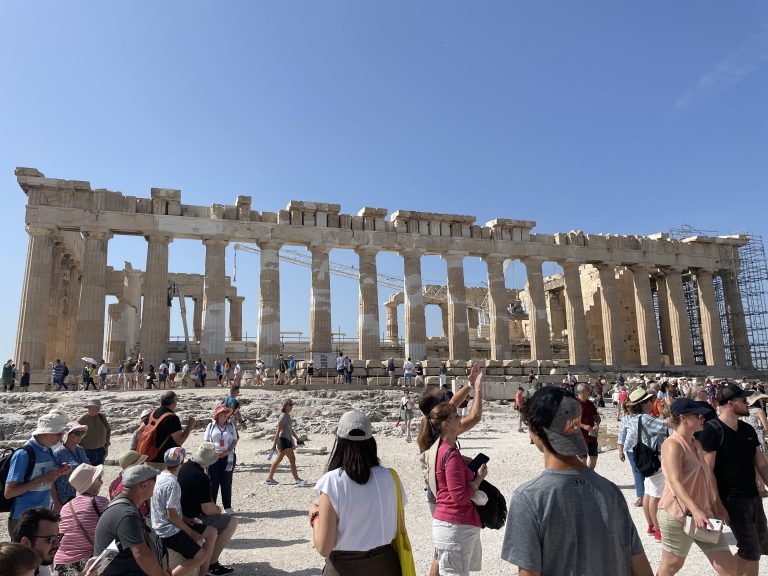
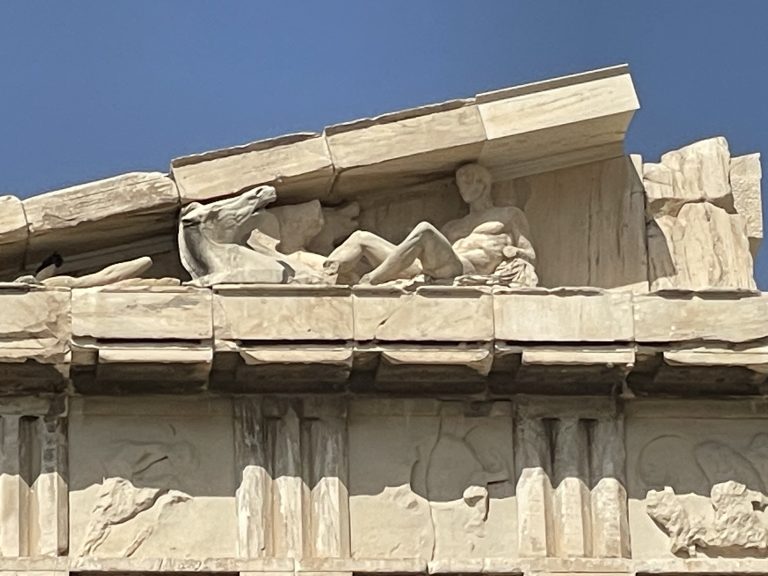
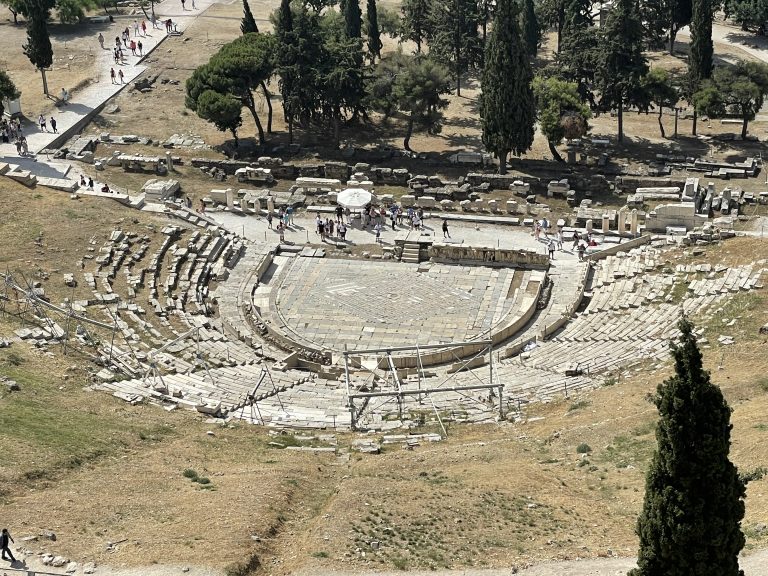
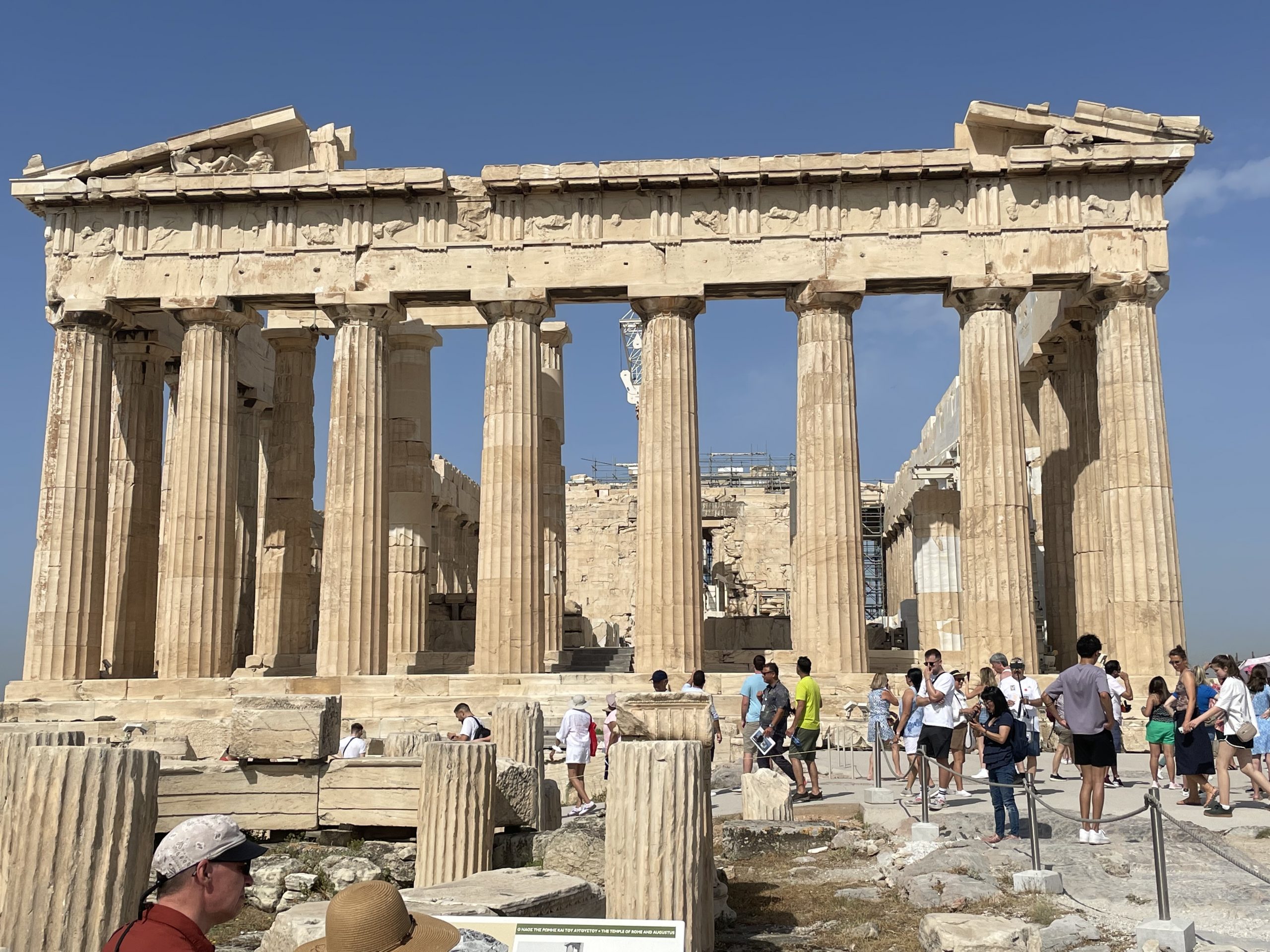
The many temples and other structures on the Acropolis were seriously damaged in the siege by the Venetians in 1687, but what remains is amazing. The pics that follow are of the three main structures, namely the Temple of the Athena Nike (this is where the Nike name and brand originates from), the Erechtheion, and the Parthenon. But I’ll start with the gate into the Acropolis, and end with the Theatre of Dionysus which is the midst of restoration.